All about gum grafting and periodontics
Gum grafting is an effective solution for addressing gum recession around the teeth.
This procedure is particularly appropriate when there is insufficient gum tissue or gum recession.
To provide relevant information on this subject, we have prepared the following comprehensive overview of periodontal disease and gum grafting.
What are the symptoms of gum recession?
Here is an overview of how it appears.
Gum recession can develop quickly and requires regular assessment. Regular dental visits are therefore important and provide an effective way to help prevent recession around the teeth.
Common symptoms
- Exposed roots
- Tooth sensitivity to cold
- Teeth that move or shift
- A tooth that looks longer than neighbouring teeth
- Abnormal alignment
- Bad breath
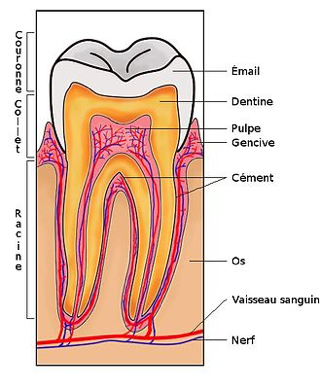
Here is a cross-section of a tooth and gum (reference: Wikipedia).
Who should you consult?
Your dentist makes a general assessment during routine examinations and may refer you to a periodontist.
A periodontist is a dental surgeon specializing in the diagnosis and treatment of gum disease and in dental implantology.
Periodontics deals with chronic diseases affecting the jawbone and gums.
What causes periodontal disease?
Certain types of bacteria and tartar beneath the gum are implicated.
Dental plaque resembles a sticky film and consists mainly of bacteria that accumulate on the teeth.
Tartar is thickened dental plaque with a harder consistency.
Over time, bacteria in plaque and tartar destroy the jawbone. This weakening directly affects the teeth, which may become loose and eventually need to be extracted.
Associated conditions
The accumulation of plaque and tartar encourages, among other things:
- Tooth decay
- Halitosis (bad breath)
- Abscesses
- Tooth pain
- Gingivitis (inflamed and bleeding gums)
- Destruction of the ligaments and jawbone
Is this disease linked to lifestyle?
Yes. Here are some factors to consider:
Lifestyle and hygiene
People with poor oral hygiene are among the first to be affected by this disease. Good dental hygiene is therefore essential.
Smoking
A predisposition is also seen among patients who smoke.
Smoking is a very important risk factor.
As well as contributing to its onset, smoking is associated with more severe disease that tends to progress more quickly.
Diabetes
There may also be a correlation with diabetes. People with diabetes may be more vulnerable to cavities and gum disease.
In turn, periodontal disease may interfere with diabetes control because of increased bacteria. When these bacteria enter the bloodstream, they can contribute to higher blood glucose levels.
What happens if periodontal disease is left untreated?
There can be serious health risks.
Respiratory diseases
Because plaque contains bacteria, they can travel to the lungs and cause a lung infection.
Premature birth
There is a risk of contamination of the placenta or amniotic fluid, potentially leading to premature birth and babies with below-normal birth weight.
Cardiovascular diseases
Some studies have linked periodontal disease to the risk of developing cardiovascular diseases, including atherosclerosis and stroke.
This may result from bacteria spreading through the bloodstream and causing heart problems. Research continues to determine whether a true connection exists; the findings could lead to new preventive measures.
What does the procedure involve?
Once gum disease has been identified, the procedure described here is a gum graft.
The principle is to take gum tissue from a donor site, usually the palate, and graft it onto the area affected by recession. The aim is to strengthen the gum, cover the root and reduce sensitivity.
In other cases, grafting can increase gum thickness to prevent future recession. Thinner tissue is more susceptible to recession and inflammation.
Purpose of the procedure
Depending on the patient’s situation, the procedure can:
- Stop the progression of gum recession
- Cover an exposed root
- Reduce pain related to tooth hypersensitivity
- Improve appearance
- Provide preventive treatment
Several proven techniques are available, each addressing specific needs. To learn more, please consult the following link:
https://www.maboucheensante.com/article/la-greffe-de-gencive/
Is it painful?
Taking the graft from the palate causes some discomfort and pain at that site. However, the area returns to normal within two to three weeks.
To reduce discomfort after the procedure, the donor site is protected during the first week with a sealed dressing. This prevents food from touching the wound during healing.
How can periodontal disease be prevented?
Regular dental visits and good dental hygiene are the tools needed to prevent periodontal disease.
Removing dental plaque helps eliminate individual risk factors.
Regular dental visits help remove plaque deposits in hard-to-reach areas using precision mechanical instruments and ultrasonic equipment.
A tip for your daily routine
Eating fruit and vegetables is an excellent way to help clean the teeth regularly.
Having this snack an hour after a meal helps remove remaining food particles from the mouth and also acts on dental plaque and tartar.
As a bonus, it is an excellent way to stimulate and strengthen the gums.
My teeth are sensitive. What can I do while waiting for an appointment?
Some dental cleaning products are specifically designed for people with sensitive teeth.
While waiting for your periodontal appointment, these products may help reduce pain during brushing. An exposed root can be very painful to brush.
For your information, here is a well-known commercial brand offering products specifically for sensitive teeth:
https://ca.crest.com/fr-ca/produits/dents-sensibles
This information gives you a basis for discussing suitable options with your dentist and the steps you can take to prevent periodontal disease.