Everything you need to know about root canal treatment
How much do you know about root canal treatment? To help you understand it, we invite you to read this comprehensive article about a very common treatment.
In dentistry, root canal treatment is used to preserve a tooth whose pulp has become infected or shows signs of inflammation.
It is an ideal solution for preserving a natural tooth and avoiding replacement with an artificial one.
Let us look at what root canal treatment is, the warning signs and the treatment itself.
What is root canal treatment?
First, root canal treatment helps avoid tooth extraction. It also prevents neighbouring teeth from moving and changing their alignment, and helps avoid potential problems, particularly with the jaw.
Also called endodontic treatment, it involves removing inflamed, infected or dead pulp.
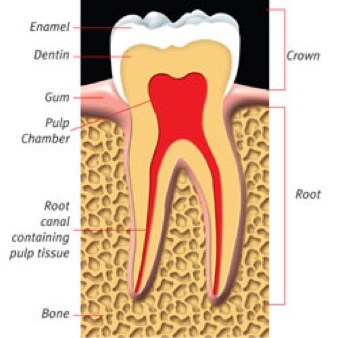
A tooth has two parts: the inner part, called dentin, and the outer part, commonly known as enamel.
The tooth contains several internal layers, with the space between them forming the canal. The canal is filled with soft tissue called dental pulp.
This tissue contains the blood vessels and nerves needed for the tooth to develop.
To help explain the structure of a tooth and the role of root canal treatment, the following two images come from the Canadian Dental Association website:
http://www.cda-adc.ca/fr/oral_health/procedures/root_canal/
This image shows a healthy tooth and its internal layers. The red area represents the pulp, which is soft tissue. The spaces within the tooth are where root canal treatment can be performed at the site of infection.
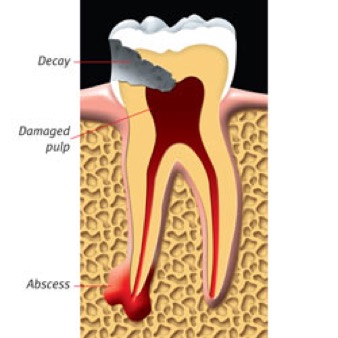
The next illustration shows an infected tooth with an abscess that requires root canal treatment.
What are the causes?
Possible causes include:
- A deep cavity
- Physical trauma, such as a blow to the jaw
- Excessive tooth clenching (bruxism)
What are the symptoms?
Once the pulp canal is affected, bacteria travel to the tip of the root, called the apex.
As bacteria multiply, they cause an abscess, sensitivity, sometimes unbearable pain and inflammation that needs treatment.
When microbes or bacteria attack a tooth, signs of damage may include:
- Damaged fillings
- Swelling
- Signs of infection
- Deep cavities
- Cracks
These factors contribute to abscess formation, triggered by infection of the dental pulp, the tooth’s soft tissue.
It is essential to act quickly because root canal treatment cannot be performed if the tooth is too damaged or has lost too much supporting tissue.
Who performs root canal treatment?
Your dentist is the person to consult for a thorough examination. They will assess the situation with a dental X-ray and specific tests, and examine any other signs affecting the tooth to refine the diagnosis.
If you do not already have a regular dentist and are looking for a dental professional, here is a useful tool for finding one near you:
http://www.dentistesquebec.org/fra/repertoire.asp
Is it expensive?
Root canal treatment does involve some costs.
The price varies according to the number of canals that need treatment.
However, the treatment is important to save the tooth and avoid extraction.
Not receiving appropriate treatment will ultimately be more expensive, as new oral health problems develop over the years.
An extracted tooth should always be replaced to avoid harming neighbouring teeth, for example by allowing them to become loose.
Delaying action will lead to higher costs for eventual tooth replacement or subsequent treatments.
Your dentist will do everything possible to save a diseased tooth. Extraction is a last resort.
How is the procedure performed?
Many people feel anxious about this procedure. Although often associated with pain, root canal treatment is a common technique.
The procedure is generally painless because it is carried out under local anaesthesia. Rather than causing pain, the treatment relieves the pain caused by an infected root or nerve.
Sometimes, before root canal treatment, it may be necessary to eliminate a source of infection, usually with antibiotics.
The procedure involves placing sterile coverings to isolate the infected tooth and prevent contamination of neighbouring teeth.
The dentist makes an opening in the centre of the tooth to reach the canal, then removes the damaged part. The canals are cleaned and disinfected before being filled with a specially designed material. The tooth is then sealed.
Depending on the case, the final step involves placing a filling or crown to cover the tooth and protect it from future fractures.
The procedure may require several visits. In that case, the dentist places a temporary filling in the opening in the crown to protect the tooth between appointments.
This procedure is also used in other situations, for example when the dentist needs to place a crown or a post and uses the tooth’s canal for support.
For more information about this procedure, please visit the following link:
https://www.maboucheensante.com/article/le-traitement-de-canal/
After treatment
What should you expect after treatment?
You may notice increased sensitivity in the days following the procedure. This is normal, particularly when chewing, and may last for about two weeks after treatment.
Improvement is gradual: the pain decreases and eventually disappears completely.
Pain after this type of procedure is also possible. It is mainly caused by inflammation around the tooth.
Is there a risk of complications?
As with any procedure, complications can occur after endodontic treatment.
If any of the following occurs, consult your dentist again for a thorough assessment of the treated tooth:
- Persistent pain
- Difficulty chewing with the treated tooth
- A swollen gum
Several factors can explain complications after treatment, including:
- A broken or cracked tooth
- Hidden canals that were not cleaned
- Filling material leaking out through a fractured crown
- Saliva entering the restoration
- A new cavity developing in the treated tooth
The dentist may repeat the root canal treatment or consider extraction, depending on the case.
Better chewing and a brighter smile are the desired outcomes of this procedure.
Prevention
How can you reduce the likelihood of needing root canal treatment?
The best approach is good dental hygiene. Preventing cavities and dental plaque helps avoid reaching the point where this treatment is needed.
Daily brushing and flossing are the best way to maintain healthy teeth and good oral health.
Combine this with a healthy diet, healthy habits and regular visits to your dentist to help avoid needing this treatment.
Here is a useful website with advice on brushing techniques and dental hygiene:
You now have the information needed to understand root canal treatment and how to help prevent the need for it.